



| Profile Width (mm) | Air Permeability Class | Profile Class | Watertightness | |
|---|---|---|---|---|
| 72 | 4 | B | 9A | |
| Resistance to Wind Load | Sound Insulation (dB) | Profile Thermal Transmittance | Window Thermal Transmittance | Glass Thicknesses |
| C3 | 40 | 1.7 | 1.6 | 20, 24 |
Energy Efficiency & Insulation
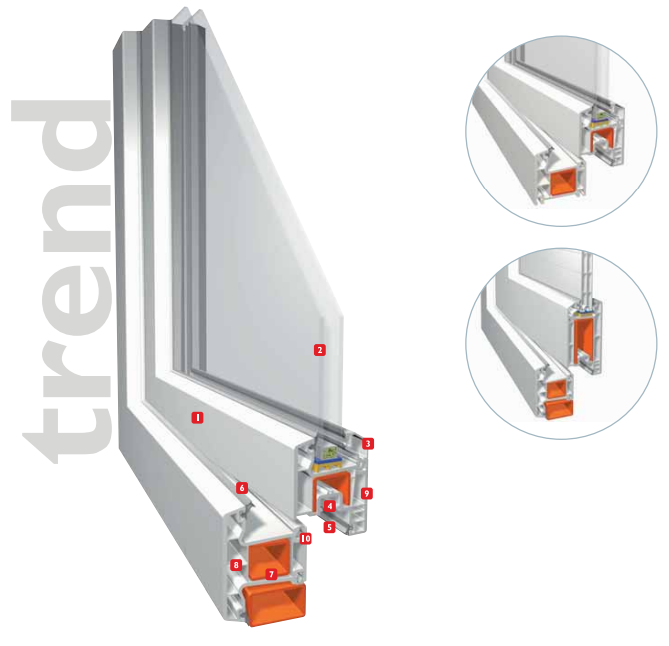
Thanks to the 62 mm depth and 5-chamber structure, heat losses are reduced and energy savings are achieved.
Durability & Structural Strength
Provides long-lasting use thanks to its galvanized reinforcement steel and robust structure.
Aesthetics & Easy Cleaning
The external appearance is preserved for a long time thanks to its dirt-repellent surface and glazing bead design.
Various Application Options
Offers flexible use with its structure that can be adapted to different glass package dimensions.
Energy efficiency in buildings has become critically important today. A significant portion of energy loss in buildings occurs through glass and window surfaces. Extraline profiles aim to enhance thermal insulation by reducing heat loss, thereby generating substantial savings on heating and cooling costs.
The 62 mm Series is manufactured in compliance with TS-5358 and EN 12608 standards, and quality certificates and test reports are available.
| Profile Width (mm) | Air Permeability Class | Profile Class TS -5358 / EN 12608 | Watertightness Class | |
|---|---|---|---|---|
| 72 | 4 | B | 9A | |
| Resistance to Wind Load Class | Sound Insulation (dB) | Profile Thermal Transmittance (W/m²K) | Window Thermal Transmittance (W/m²K) | Glass Thicknesses (mm) |
| C3 | 40 | 1.7 | 1.6 | 20, 24 |
Energy Efficiency & Insulation
Thanks to the 62 mm depth and 5-chamber structure, heat losses are reduced and energy savings are achieved.
Durability & Structural Strength
Provides long-lasting use thanks to its galvanized reinforcement steel and robust structure.
Aesthetics & Easy Cleaning
The external appearance is preserved for a long time thanks to its dirt-repellent surface and glazing bead design.
Various Application Options
Offers flexible use with its structure that can be adapted to different glass package dimensions.
Energy efficiency in buildings has become critically important today. A significant portion of energy loss in buildings occurs through glass and window surfaces. Extraline profiles aim to enhance thermal insulation by reducing heat loss, thereby generating substantial savings on heating and cooling costs.
The 62 mm Series is manufactured in compliance with TS-5358 and EN 12608 standards, and quality certificates and test reports are available.
| Profile Width (mm) | Air Permeability Class | Profile Class TS -5358 / EN 12608 | Watertightness Class | |
|---|---|---|---|---|
| 72 | 4 | B | 9A | |
| Resistance to Wind Load Class | Sound Insulation (dB) | Profile Thermal Transmittance (W/m²K) | Window Thermal Transmittance (W/m²K) | Glass Thicknesses (mm) |
| C3 | 40 | 1.7 | 1.6 | 20, 24 |
Energy Efficiency & Insulation
Thanks to the 62 mm depth and 5-chamber structure, heat losses are reduced and energy savings are achieved.
Durability & Structural Strength
Provides long-lasting use thanks to its galvanized reinforcement steel and robust structure.
Aesthetics & Easy Cleaning
The external appearance is preserved for a long time thanks to its dirt-repellent surface and glazing bead design.
Various Application Options
Offers flexible use with its structure that can be adapted to different glass package dimensions.
Energy efficiency in buildings has become critically important today. A significant portion of energy loss in buildings occurs through glass and window surfaces. Extraline profiles aim to enhance thermal insulation by reducing heat loss, thereby generating substantial savings on heating and cooling costs.
The 62 mm Series is manufactured in compliance with TS-5358 and EN 12608 standards, and quality certificates and test reports are available.
| Profile Width (mm) | Air Permeability Class | Profile Class TS -5358 / EN 12608 | Watertightness Class | |
|---|---|---|---|---|
| 72 | 4 | B | 9A | |
| Resistance to Wind Load Class | Sound Insulation (dB) | Profile Thermal Transmittance (W/m²K) | Window Thermal Transmittance (W/m²K) | Glass Thicknesses (mm) |
| C3 | 40 | 1.7 | 1.6 | 20, 24 |
Energy Efficiency & Insulation
Thanks to the 62 mm depth and 5-chamber structure, heat losses are reduced and energy savings are achieved.
Durability & Structural Strength
Provides long-lasting use thanks to its galvanized reinforcement steel and robust structure.
Aesthetics & Easy Cleaning
The external appearance is preserved for a long time thanks to its dirt-repellent surface and glazing bead design.
Various Application Options
Offers flexible use with its structure that can be adapted to different glass package dimensions.
Energy efficiency in buildings has become critically important today. A significant portion of energy loss in buildings occurs through glass and window surfaces. Extraline profiles aim to enhance thermal insulation by reducing heat loss, thereby generating substantial savings on heating and cooling costs.
The 62 mm Series is manufactured in compliance with TS-5358 and EN 12608 standards, and quality certificates and test reports are available.
| Profile Width (mm) | Air Permeability Class | Profile Class TS -5358 / EN 12608 | Watertightness Class | |
|---|---|---|---|---|
| 72 | 4 | B | 9A | |
| Resistance to Wind Load Class | Sound Insulation (dB) | Profile Thermal Transmittance (W/m²K) | Window Thermal Transmittance (W/m²K) | Glass Thicknesses (mm) |
| C3 | 40 | 1.7 | 1.6 | 20, 24 |
Energy Efficiency & Insulation
Thanks to the 62 mm depth and 5-chamber structure, heat losses are reduced and energy savings are achieved.
Durability & Structural Strength
Provides long-lasting use thanks to its galvanized reinforcement steel and robust structure.
Aesthetics & Easy Cleaning
The external appearance is preserved for a long time thanks to its dirt-repellent surface and glazing bead design.
Various Application Options
Offers flexible use with its structure that can be adapted to different glass package dimensions.
Energy efficiency in buildings has become critically important today. A significant portion of energy loss in buildings occurs through glass and window surfaces. Extraline profiles aim to enhance thermal insulation by reducing heat loss, thereby generating substantial savings on heating and cooling costs.
The 62 mm Series is manufactured in compliance with TS-5358 and EN 12608 standards, and quality certificates and test reports are available.
Konut projelerinde balkon ve teras sürme sistemleri
Ofis ya da ticari yapı cephesi uygulamaları
Her türlü yüksek yalıtım gerektiren sürme sistem projeleri
| Profile Width (mm) | Air Permeability Class | Profile Class TS -5358 / EN 12608 | Watertightness Class | |
|---|---|---|---|---|
| 72 | 4 | B | 9A | |
| Resistance to Wind Load Class | Sound Insulation (dB) | Profile Thermal Transmittance (W/m²K) | Window Thermal Transmittance (W/m²K) | Glass Thicknesses (mm) |
| C3 | 40 | 1.7 | 1.6 | 20, 24 |
Energy Efficiency & Insulation
Thanks to the 62 mm depth and 5-chamber structure, heat losses are reduced and energy savings are achieved.
Durability & Structural Strength
Provides long-lasting use thanks to its galvanized reinforcement steel and robust structure.
Aesthetics & Easy Cleaning
The external appearance is preserved for a long time thanks to its dirt-repellent surface and glazing bead design.
Various Application Options
Offers flexible use with its structure that can be adapted to different glass package dimensions.
Energy efficiency in buildings has become critically important today. A significant portion of energy loss in buildings occurs through glass and window surfaces. Extraline profiles aim to enhance thermal insulation by reducing heat loss, thereby generating substantial savings on heating and cooling costs.
The 62 mm Series is manufactured in compliance with TS-5358 and EN 12608 standards, and quality certificates and test reports are available.
| Profile Width (mm) | Air Permeability Class | Profile Class TS -5358 / EN 12608 | Watertightness Class | |
|---|---|---|---|---|
| 72 | 4 | B | 9A | |
| Resistance to Wind Load Class | Sound Insulation (dB) | Profile Thermal Transmittance (W/m²K) | Window Thermal Transmittance (W/m²K) | Glass Thicknesses (mm) |
| C3 | 40 | 1.7 | 1.6 | 20, 24 |
Energy Efficiency & Insulation
Thanks to the 62 mm depth and 5-chamber structure, heat losses are reduced and energy savings are achieved.
Durability & Structural Strength
Provides long-lasting use thanks to its galvanized reinforcement steel and robust structure.
Aesthetics & Easy Cleaning
The external appearance is preserved for a long time thanks to its dirt-repellent surface and glazing bead design.
Various Application Options
Offers flexible use with its structure that can be adapted to different glass package dimensions.
Energy efficiency in buildings has become critically important today. A significant portion of energy loss in buildings occurs through glass and window surfaces. Extraline profiles aim to enhance thermal insulation by reducing heat loss, thereby generating substantial savings on heating and cooling costs.
The 62 mm Series is manufactured in compliance with TS-5358 and EN 12608 standards, and quality certificates and test reports are available.
| Profile Width (mm) | Air Permeability Class | Profile Class TS -5358 / EN 12608 | Watertightness Class | |
|---|---|---|---|---|
| 72 | 4 | B | 9A | |
| Resistance to Wind Load Class | Sound Insulation (dB) | Profile Thermal Transmittance Coefficient (W/m²K) | Window Transmittance Coefficient (W/m²K) | Glass Thicknesses (mm) |
| C3 | 40 | 1,7 | 1,6 | 20, 24 |
Energy Efficiency & Insulation
Thanks to the 62 mm depth and 5-chamber structure, heat losses are reduced and energy savings are achieved.
Durability & Structural Strength
Provides long-lasting use thanks to its galvanized reinforcement steel and robust structure.
Aesthetics & Easy Cleaning
The external appearance is preserved for a long time thanks to its dirt-repellent surface and glazing bead design.
Various Application Options
Offers flexible use with its structure that can be adapted to different glass package dimensions.
Energy efficiency in buildings has become critically important today. A significant portion of energy loss in buildings occurs through glass and window surfaces. Extraline profiles aim to enhance thermal insulation by reducing heat loss, thereby generating substantial savings on heating and cooling costs.
The 62 mm Series is manufactured in compliance with TS-5358 and EN 12608 standards, and quality certificates and test reports are available.
Today, the importance of energy conservation and efficient energy use is growing alongside the significance of energy sources themselves. In building complexes, 82% of energy consumption is dedicated to heating; this figure accounts for 26% of the total energy used in our country. Heat loss in buildings stems from various sources: 40% through exterior walls, 30% through windows, 17% through exterior or balcony doors, 7% through the roof, and 6% through the flooring. Consequently, residential buildings—and specifically PVC window systems as a form of insulation—emerge as key areas for achieving energy savings. The fact that energy is the most limited and costly resource places greater emphasis on “energy conservation”—or insulation—within window systems.


Please contact our sales representatives for technical system details, color variations, and ordering processes regarding the Extraline profile. You can download the detailed product catalog, installation guide, and supporting documents in PDF format.

It prevents the growth of bacteria

Protects people and environment

+2 feature provides more insulation


Welcome to Erpen’s world of superior insulation. How can we help you protect your home from external elements and save energy? Fill out the form, and let us be your solutions partner.